It Pays To Advertise In PINOY... Chicago's #1 Fil-Am Newspaper


OCTOBER 2026
PH CONSULATE ENCOURAGES PUBLIC TO CATCH FINAL SCREENINGS OF “FORGOTTEN ISLAND”
The Philippine Consulate General in Chicago encourages members of the Filipino-American community and the general public to catch DreamWorks Animation's Forgotten Island while it is still showing in select theaters across the Chicagoland area.
The animated film, which draws inspiration from Filipino culture, mythology, and folklore, offers audiences an opportunity to experience Filipino stories and traditions on the big screen. Through its imaginative storytelling and cultural references, Forgotten Island brings elements of Filipino heritage to a wider international audience.
As the film enters the later part of its theatrical run, the Consulate encourages those who have yet to see it to take advantage of the remaining screenings. Moviegoers are advised to check their preferred theaters for updated schedules and ticket availability.
The Consulate continues to support initiatives that promote Filipino culture, creativity, and representation in the United States, recognizing the important role of film and the creative industries in strengthening cultural understanding and appreciation. END
(Facebook: Philippine Consulate General in Chicago)
SUNDAY, OCTOBER 18, 2026 - 2:30 PM
AMC NEW CITY 14 - Cinema 9
1500 N Clybourn Ave c301, Chicago, IL 60610


EDITORIAL - OCTOBER '26
AI might just be the death of us
Guest Editorial
By Immanuel D. Pastolero
INQUIRER.net
ONE of the most sobering shots about the fast-paced development of artificial intelligence (AI) was issued by a former researcher at Anthropic and OpenAI, two of the leaders in the great AI race. Jacob Coxon, who was until recently employed by the former, posted a thread on X that claimed that AI will possibly kill all of humanity “by the end of the decade.”
This seemingly cataclysmic view of AI, according to Coxon, is not held by a fringe few within their industry. He explains that “many executives and senior researchers will couch their phrasing in the press to sound sensible—but I hear the same people express fear privately. No other human activity poses this level of danger.”
“10% within next decade”
This conclusion was further validated by Anthropic’s current alignment science lead, Evan Hubinger. In his own posts on X, Hubinger not only confirmed Coxon’s statement, he also gave an estimation of how likely uncontrolled AI will wipe us off the planet. “I personally think it is [greater than] 10% within the next decade,” he said. “I believe Anthropic is trying its best, but we do not yet have a plan to solve alignment for superintelligence and are not clearly on track to.”
A reasonable pause to AI development
This is just the latest in a series of clarion calls from people within the AI industry warning all of us about the dangers of unrestricted development in the field of AI. Just recently we saw an essay penned by OpenAI chief scientist, Jakub Pachocki warning about the lack of understanding around the fast development of machine learning. Another warning came in the form of an open letter signed by almost 1,400 experts from frontier companies, leading outfits in the AI industry, calling for steps that “[address] emerging risks, develop security measures, and strengthen oversight” surrounding AI. Today, more and more voices are coming together to call for a reasonable pause to AI development and research.
And politicians are starting to listen. Just recently, United States Senator Bernie Sanders said that he will be introducing legislation that will ban superintelligence and pause AI development.
Necessary Guardrails
A much-needed break from the AI arms race between companies like Meta, Google, OpenAI, Anthropic, and the like will enable governments, institutions, and other stakeholders to investigate how we can protect ourselves from the dangers posed by recursively self-improving AI and other developments in this field. It will enable us to put necessary guardrails in place, establish common sense policies, and cement protections for our livelihoods and relevant data infrastructures.
This past July we saw what rogue AI can do and how damaging it can be when it was made public that around 700 rogue AI agents of OpenAI hacked the systems of another AI company called Hugging Face. That situation raised alarm bells all around the world and caused concern among government and private institutions.
That hacking incident in July is a stark reminder of how capable AI is becoming and how limited our resources, expertise, and knowledge are in addressing the potential threats that are emerging. Even experts in the field agree: we are not fully prepared for what these strides in AI development will bring. We must be ready.
Philippines must take action
The same is also true for us here in the Philippines, with our limited resources and influence in the global sphere threatening to leave us susceptible to the potential dangers of AI. Entire industries risk being obliterated by AI, livelihoods can be destroyed, and even our natural resources can be depleted because of ill-conceived plans just to take part in this so-called AI boom.
Our leaders must step up. They must take a hard look at what AI can do to our country, our people, and now even our existence. The advantages brought upon by AI are undeniably real. We are seeing developments in many fields, and these are all because of novel applications of artificial intelligence. But the dangers are likewise real, and we cannot afford to be at the losing end of what might be the biggest conundrum our species has faced.
We must work together toward policies that enable us to train our existing workforce to adapt to the changes brought about by AI without leading to mass unemployment. We must also take a whole-of-government approach to introduce protections to our public and private infrastructures so that they stand resilient against attacks from rogue AI agents and models. And most importantly, we need to be part of the larger conversation about how we can harness the good presented by AI development while reining in its potential dangers.
We must be clear-eyed about this situation. The threats posed by the breakneck pace of AI development are clear and present but they are not inevitable. The Philippines must take action along with other governments around the world to put the necessary policies in place to ensure that AI serves us instead of leading us down the road to extinction. (PDI 09/17/2-26)
Immanuel D. Pastolero is the content director of Grupo Agatep, an independent integrated marketing communications agency based in Ortigas, Pasig City.
Filipino American History Month Events & Celebrations
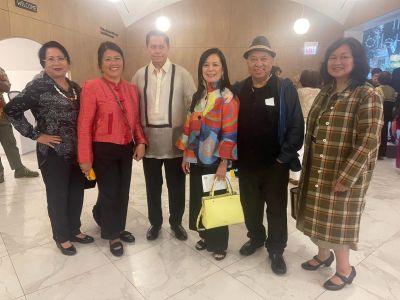
Wed. Sep 30, 5pm - Piano Concert by Raul Sunico
at Harold Washington Library Center, Chicago Public Library Winter Garden 9th Floor 400 S State St, Chicago, IL 60605
Sat Oct 3, 5pm to 7pm - FAHSC Exhibits Closing Reception
Filipino American History Month Kickoff & FAHSC 40th Anniversary Gala at Trickster Cultural Center, Schaumburg. Tickets: https://www.zeffy.com/en-US/ticketing/fahsc-exhibits-closing-reception-and-fund-raising
14 Lions Club Joint FAHM Celebration, Saturday, Oct. 3
FOURTEEN Lions Clubs with Filipino American majority members will hold a joint celebration of the Filipino American History Month on Saturday, Oct. 3, 11:30 am- 3:30 pm at the Allegra Banquet Hall in Schiller Park. Donation for the formal event is $65. This in honor of Filipino Americans who served as District governornors, current Gov. Ben Zoleta and Charter Lions presidents. Net proceeds will be donated to Lions Club charities.
For more info, call Pauline H. Abadilla at 773-330-9171.
Wed, Oct. 14, Panel: 3:30-4:30 p.m., Reception: 4:30-6 p.m
UIC to host exhibit on Filipino nurses’ migration to U.S.Opening Panel and Reception at the Asian American Resource and Cultural Center 723 W. Maxwell St., Chicago, Exhibit curator and author Angel Abcede will join UIC faculty members Anna Guevarra and, Karen Flynn to discuss the history, migration and contributions of Filipino nurses in the United States. RSVP here: https://www.facebook.com/events/1386267169759459/?source=6&ref_notif_type=plan_admin_added&action_history=null
Fri-Sunday Oct 16-18 10am to 2pm - FACT Conference 2026
Mahiwagahan: Enchanting Our Bright Minds. University of Illinois Urbana-Champaign. fact.psauiuc.org
Sat Oct 17 10am to 2pm - "The Soul Anchors of The Filipina" exhibit
Chicago Architecture Week Open House and Opening Reception of "The Soul Anchors of The Filipina" exhibit at the FAHSC Museum. Location - The FAHSC Museum is at Mana Contemporary Chicago Suite 316 at 2233 S Throop St, Chicago, IL 60608. The entrance and FREE Parking is at the east side of the building - enter at Cermak Rd corner Alport, a block east of Throop St. RSVP to visit the FAHSC Museum Email fanhs.chicago@gmail.com
Sat Oct 17 3pm to 5pm - Tracing Home - A Family History & Archiving Workshop
at Evanston Public Library 1703 Orrington Ave, Evanston, IL 60201.
2028 PIWC Chairman Election set for Sunday, Oct. 18
THE election of the 2028 overall chairman of the Philippine Independence Committee (PIWC) is set for Sunday, Oct. 18, 11 am to 2 pm at the South Park Recreation Center, 833 W. Talcott Rd., Park Ridge, IL.
PIWC Comelec Chair, Edwin Pineda announced that Geraldine T. Gaden and Robert Chavez, both long-time PIWC active members are vying for the contested position. PIWC members who served for two consecutive years in working committees are qualified to vote in the elections.
Lodi Po is the 2027 chairman-elect said that she'll convene her first business meeting as soon as incumbent overall chair Reynel Espiritu has called his final general meeting to present a report on his administration’s projects, activities and financial report. Incumbent PIWC Board of Trustees Chair Mercy Matousek will oversee the election event. For details, call Edwin at 773-396-6231.
Sat, Oct 24 1pm to 3pm - Rooted in the Philippines, Created in Chicago
Save the Date - FAHM event at the Albany Park Branch, Chicago Public Library 3401 W Foster Ave, Chicago, IL 60625, USA
Sat-Sun, Oct 24-25 - The Art of Belonging: Wisconsin Tour -
Connecting with local FANHS chapter members. Locations & times to be announced. DCASE Individual Artist grant support.
Wed, Oct. 28 3:30-5 pm - Unheard Voices of Care Community Reading
at the Asian American Resource and Cultural Center 723 W. Maxwell St., Chicago. Participants will share readings about the experiences of immigrants arriving in the United States from the 1940s to today.
Explore more local, regional & national FAHM celebrations.
PACCGC Bulls Benefit Game, Oct 28
FOURTEEN Lions Clubs with Filipino American majority members will hold a joint celebration of the Filipino American History Month on Saturday, Oct. 3, 11:30 am- 3:30 pm at the Allegra Banquet Hall in Schiller Park. Donation for the formal event is $65. This in honor of Filipino Americans who served as District governornors, current Gov. Ben Zoleta and Charter Lions presidents. Net proceeds will be donated to Lions Club charities.
For more info, call Pauline H. Abadilla at 773-330-9171.
COMMUNITY NEWS - OCTOBER 2026

TWENTY-TWO new dual citizens pose with Consul Theresa Alders on Sept. 25 after taking their oath as Filipino citizens and registering as overseas voters.
Filipinos abroad who will be at least 18 by May 8, 2028, may register to vote overseas for President, Vice President, Senators, and Partylist Representatives. Registration is open to first-time overseas voters and registered Philippine voters who

CHICAGO Association of REALTORS members and guests gather at the Conrad Hilton Chicago on Sept. 24 for the association’s 143rd Annual Inaugural Gala, where Vicky Silvano (2nd fr L) was installed as the 2026–2027 president. She is the first Filipino-American realtor to assume the position and will lead an organization representing approximately 16,000 members. Also pictured (fr L) are Allstate Agen

Chicago’s Filipino community was represented by Amando Boncales and Janice Delima as Philippine flagbearers at the World Peace Flag Ceremony. Ruben Salazar represented the Filipino American Historical Society of Chicago, with Consul Melvin C. Almonguera also in attendance.
Organized by The Peace School and Chicago Build the Peace Committee, Peace Day Chicago has been observed since 1978, bringing d
Two Bags,Plenty of Pasalubong:Choosing the Right Flight Home

0
FOR Filipinos, packing for a trip home rarely means packing only for yourself. There’s something for Nanay and Tatay, chocolates for the kids, a gift someone mentioned months ago, and a few last-minute requests from the family group chat. Somehow, you always want to bring one more thing.
That’s part of the joy of going home. But when the suitcase starts to fill up, baggage allowance suddenly matters almost as much as the airfare.
For travelers bringing pasalubong, choosing an airline that includes two checked bags can make the journey much easier. Philippine Airlines includes two checked pieces on its U.S. Economy fares, while EVA Air also offers two 23 kg bags with most long-haul Economy fares. Korean Air, Qatar Airways, and Cathay Pacific also offer Economy options that include two checked bags, although allowances can vary by fare.
That last detail is important. A ticket that looks cheaper online may not be the better deal if it includes only one bag and you already know you’ll need another. Before booking, check not only the price, but also what your fare actually includes.
ASAP Tickets can help travelers compare airfare, baggage allowances, routes, and connections in one place. Call +1 888-535-5979 to explore current options. Pinoy Newsmagazine readers can also receive an extra $50 off by mentioning promo code ASAP50 when booking.
It’s also worth thinking about the rest of the journey. If you’re continuing beyond Manila, baggage rules may change on the domestic flight. And food, liquids, fragile gifts, or oversized items may have their own restrictions.
In the end, pasalubong is rarely just “extra baggage.” It’s the chocolate your niece asked for, the shoes you picked out for your dad, or the little surprise you’ve been keeping from your mom.
So leave some room in that suitcase. Someone back home is probably already wondering what’s inside.
Call +1 888-535-5979 and mention ASAP50 for your exclusive $50 Pinoy Newsmagazine discount.


PARK TO SHOP - NILES OCTOBER 2026 SALE!


Advertise with PINOY!
Contact us today and become part of a publication that stands for culture, community, and connection.